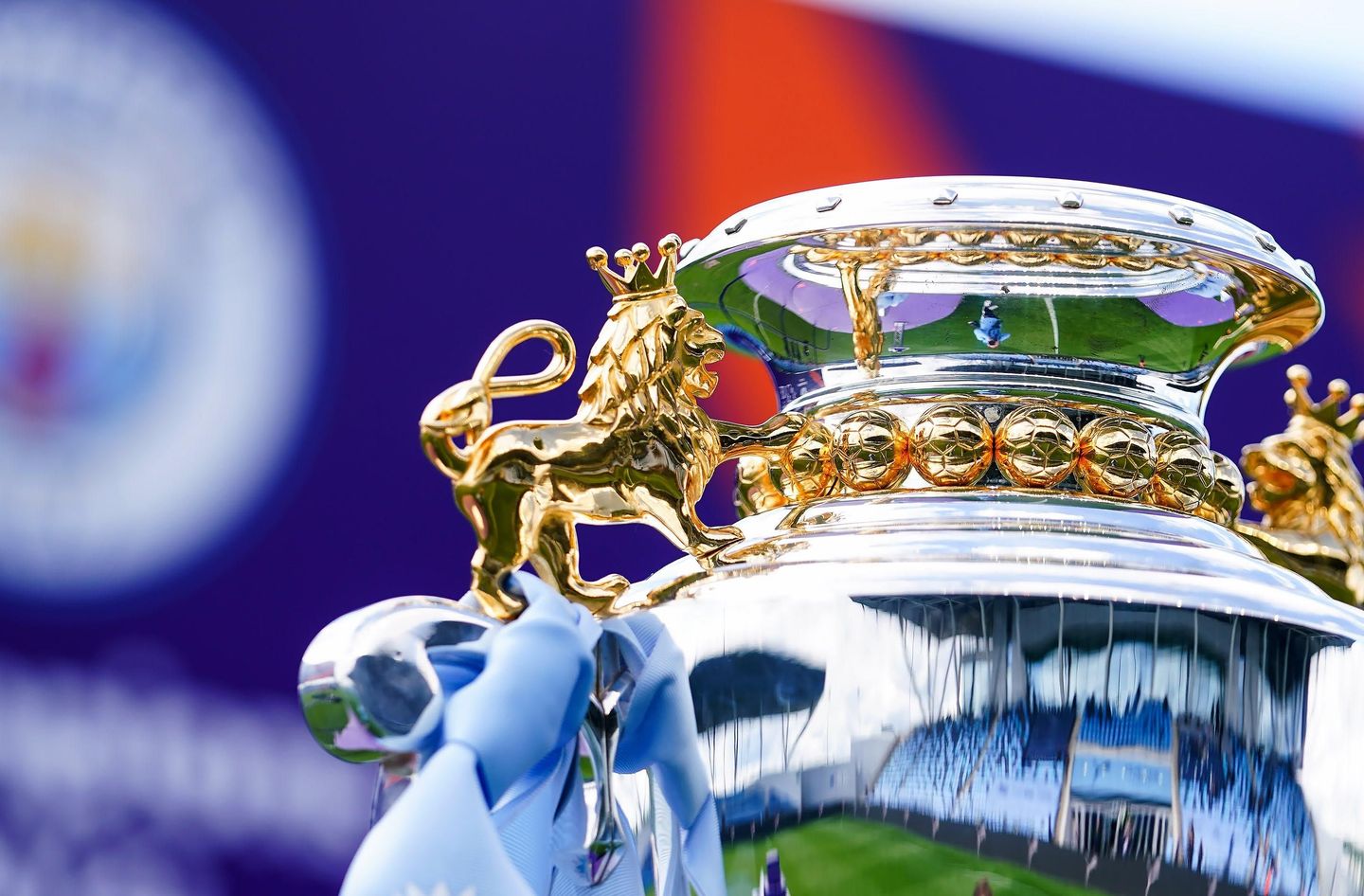
Premier League 2 is a competition that forms an essential part of the suite of competitive experiences available to players in the Professional Development Phase (PDP), from Under-17 to Under-21.
These competitions are designed to offer talented young players an experience that closely replicates the first-team level and support their preparation for senior football.
Its aim is to expose players to the rigours and challenges of senior football, while retaining a development focus. Players in Premier League 2 (PL2) cannot be older than 21.
What is the history of the competition?
The competition was previously called the "Under-21 Premier League format" before changing its name to "Premier League 2" from 2016/17.
Between 2016-2023, Premier League 2 comprised the 25 clubs with "Category One" Academies split into two divisions, with relegation and promotion of clubs in each division.
Since the start of the 2023/24 season, there has been only one division, made up of clubs with Category One Academies.
Initially featuring 26 such clubs, this increased to 29 for the 2025/26 season with the addition of Birmingham City, Burnley and Ipswich Town. Then it rose to 31 clubs with the introduction of AFC Bournemouth and Brentford for 2026/27.
| Club | Division | Club | Division |
| Arsenal | PL | Liverpool | PL |
|---|---|---|---|
| Aston Villa | PL | Man City | PL |
| Birmingham City | Champ | Man Utd | PL |
| Blackburn Rovers | Champ | Middlesbrough | Champ |
| AFC Bournemouth | PL | Newcastle | PL |
| Brentford | PL | Norwich | Champ |
| Brighton | PL | Nott'm Forest | PL |
| Burnley | Champ | Reading | League One |
| Chelsea | PL | Southampton | Champ |
| Crystal Palace | PL | Stoke City | Champ |
| Derby County | Champ | Sunderland | PL |
| Everton | PL | Spurs | PL |
| Fulham | PL | West Brom | Champ |
| Ipswich | PL | West Ham | Champ |
| Leeds United | PL | Wolves | Champ |
| Leicester City | League One |
The participating clubs are divided into three groups based on performances over the previous three seasons: Top tier - 1st-10th; Middle tier - 11-21st; Bottom tier - 22nd-31st.
Fixtures are determined by a draw made according to clubs' positions in the pots.
There are 20 Matchweeks, with each team playing 20 matches during the regular season, 10 home and 10 away.
Teams will play no more than eight and no fewer than six teams from each of the groups, making up the 20 fixtures.
Results (three points for a win and one point for a draw) generate a combined table ranking the 31 teams. After the regular season of 20 Matchweeks is completed, the top 16 teams qualify for the elimination playoffs.
For the elimination playoffs, teams are drawn against each other based on their league positions. For example, the team finishing first will face the team that finished 16th. The playoffs consist of a round of 16, quarter-finals, semi-finals and a final, all of which will be standalone fixtures.
In addition, the teams that finish the regular season in the top 16 are invited to take part in the Premier League International Cup in the following campaign.
The eight Premier League 2 teams finishing in positions from 17th to 24th will go into a cross-category play-off competition with the top eight teams from the Professional Development League (Category 2). This will also consist of a round of 16, quarter-finals, semi-finals and final.
Why was the change of format, to one division, introduced?
The change came about after an extensive review of PDP competitions, which sought to enhance the transition of talented Academy players into senior football, and engaged various stakeholders, including football directors, Academy managers, first-team coaches and Academy players.
The removal of relegation introduces positive jeopardy; it supports clubs making development-first decisions, and minimises the impact of relegation on future groups of U21 players.
Also the experience of playoffs has opened up to more teams rather than the four in Division 2 of previous seasons.
The new format also gives teams a greater breadth of fixtures, playing 20 different opponents, compared with only 13 in Division 1 and only 10 in Division 2.
The single-division format also provides greater flexibility to add or decrease the number of fixtures in future seasons, dependent on the number of teams in the league, as well as access to additional development opportunities, including matches against senior teams and international opposition.
Past Premier League 2 champions
2025/26 Brighton & Hove Albion
2024/25 Manchester City
2023/24 Tottenham Hotspur
Premier League 2 Division 1 winners
2022/23 Manchester City
2021/22 Manchester City
2020/21 Manchester City
2019/20 Chelsea
2018/19 Everton
2017/18 Arsenal
2016/17 Everton
2015/16 Manchester United
2014/15 Manchester United
2013/14 Chelsea
2012/13 Manchester United
Premier League Division 2 winners
2022/23 Southampton
2021/22 Fulham
2020/21 Leeds United
2019/20 West Ham United
2018/19 Wolverhampton Wanderers
2017/18 Blackburn Rovers
2016/17 Swansea City
2015/16 Derby County
2014/15 Middlesbrough