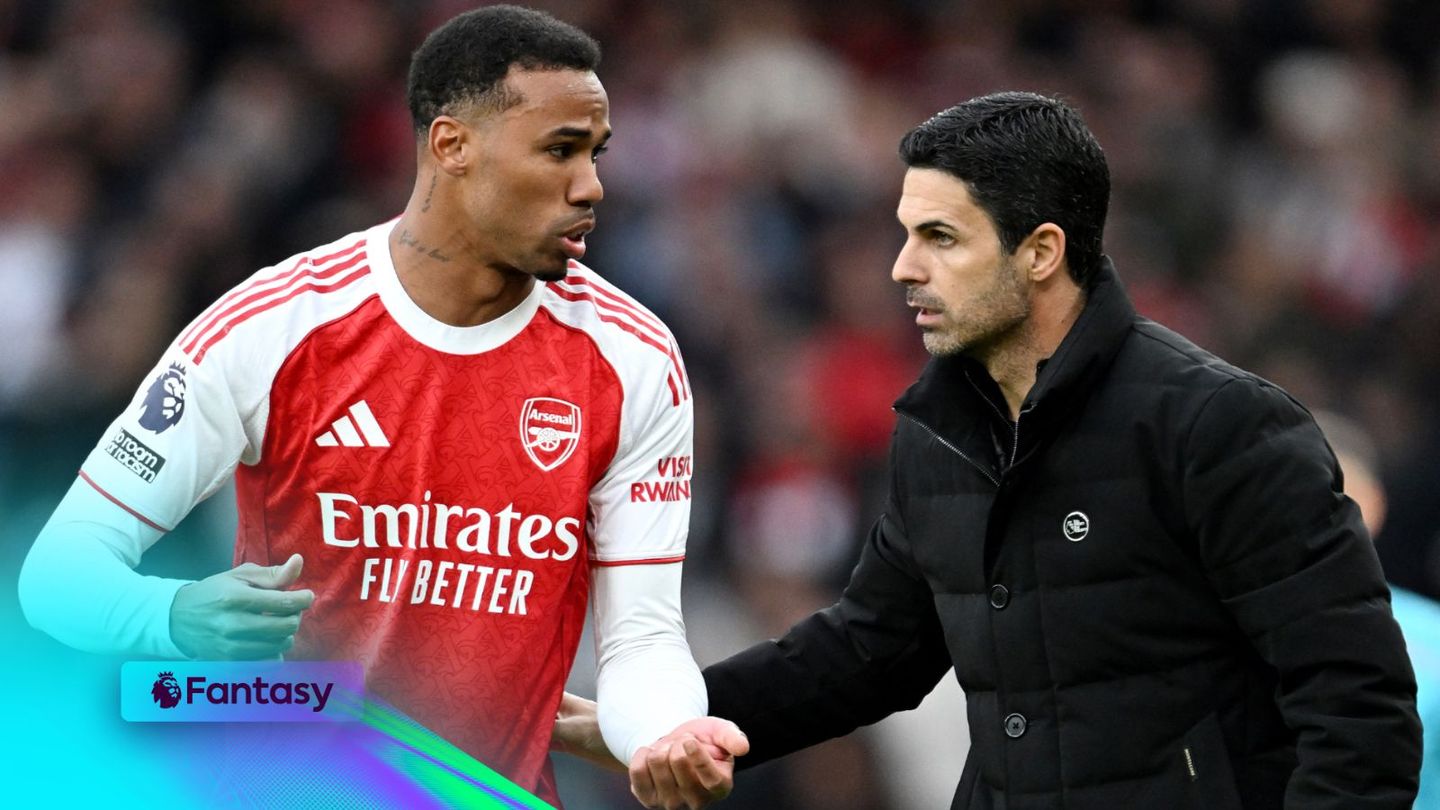
The Scout explains why Gameweek 32 could be a good time for managers who are yet to play their Wildcard to activate it, and whether there are any other standout opportunities to use the chip.
If you still have your second Wildcard of the season left to play, the results of the upcoming FA Cup quarter-finals on Saturday 4 and Sunday 5 April can help you determine the best time to deploy the chip and pick a new squad for the remainder of the season.
This is because the results of the FA Cup quarter-finals will decide which clubs get Blank Gameweeks and Double Gameweeks, and when those will be.
Notably, these cup ties will be played some five days before the next Fantasy deadline - the Gameweek 32 deadline at 18:30 BST on Friday 10 April.
Since this information could prove decisive when it comes to deciding your chip strategy for the season run-in, a number of Fantasy managers may well find themselves activating their Wildcard chip in the week commencing 6 April - which is still in THIS current Gameweek.
Why will FA Cup results cause Blank and Double Gameweeks?
The FA Cup semi-finals take place on the same weekend as Gameweek 34, so any Premier League club who win their FA Cup quarter-final would need to have their Premier League match removed from that GW34 weekend, and the fixture would need a new date.
That would also affect their scheduled league opponents. BOTH clubs would have a "Blank Gameweek" in GW34, with no league fixture, and their players would score zero points in Fantasy.
If the match is rescheduled into another Gameweek, then both clubs would get a "Double Gameweek" where they play two league matches in one Gameweek, and their players would get two opportunities to score points.
At present, we expect Gameweek 33 and Gameweek 36 to be Double Gameweeks because the midweek days in those weeks don’t clash with European competitions, so it is guaranteed that all Premier League clubs will be free to play rescheduled league matches.
A look at the draw below shows that, of the six Premier League clubs who are in the FA Cup quarter-finals, Arsenal and Chelsea are the likeliest to progress because they both face lower-league opposition.
FA Cup quarter-final ties
Southampton v Arsenal
Chelsea v Port Vale
Man City v Liverpool
West Ham v Leeds
There seems a good chance, therefore, that Arsenal, along with their current Gameweek 34 opponents Newcastle United, will "blank" in Gameweek 34 and have a yet-to-be-scheduled Double Gameweek.
Chelsea's situation is slightly different because they, unlike Arsenal, have been eliminated from the UEFA Champions League. So their Gameweek 34 match against Brighton & Hove Albion could potentially be moved to the midweek and STAY in Gameweek 34.
Crucially, should the new dates for any rescheduled matches be confirmed at some point in that five-day period between the FA Cup quarter-finals and the Gameweek 32 deadline, then managers will have the important information on Blank and Double Gameweeks at their disposal to finalise their chip strategies for the run-in.
So, why might managers play their Wildcard in Gameweek 32?
Playing the Wildcard in Gameweek 32 would allow you to pick a new squad full of players who have a Double Gameweek 33 (DGW33).
You could then play your Bench Boost chip in DGW33 and, depending on the number of clubs who play twice, profit from up to 15 players who have two matches. Essentially, you would have 30 chances to score points in that Gameweek, instead of the usual 11 in a normal Gameweek.
The troublesome Blank Gameweek 34 would be problematic, because some of your players might not have a match, but you could use your Free Hit chip (if you still have it) to select a one-Gameweek squad to navigate that reduced round of matches.
This chip strategy would also allow you to save up free transfers which you could use prior to Double Gameweek 36 (DGW36), bringing in the key players who have two matches in that Gameweek.
Why you could save the Wildcard until later
Another option is waiting until Gameweek 35 to play your Wildcard.
Between now and the problematic Blank Gameweek 34 (BGW34), you would aim to "dead-end" your squad, using your transfers on players who have favourable short-term schedules and who will get you through BGW34.
You would then get rid of those short-term picks when you pick your brand new squad in Gameweek 35.
Similarly to the example above, the idea would be to set up your squad to use your Bench Boost chip in Double Gameweek 36, profiting from the players who have two matches.
By being more patient and planning to Wildcard in Gameweek 35 instead of Gameweek 32, you might have further information at your disposal.
For example, the only match which is currently yet to be given a new date is Manchester City’s home contest with Crystal Palace. And where that match is placed may ultimately be decided by Palace’s progress in Europe, given Oliver Glasner’s side have reached the Conference League quarter-finals.
Furthermore, if Liverpool reach the FA Cup final AND Aston Villa reach the Europa League final, both clubs would have a Blank Gameweek 37 (BGW37) and a future Double Gameweek, because neither club would have space in their calendar for their scheduled match at Anfield to remain in Gameweek 37.
The possible downside to this strategy is that as the season wears on, some clubs might have less to play for, so there might be more rotation. That can cause frustration for Fantasy managers who have made big, late moves that rely on the performances of key players.