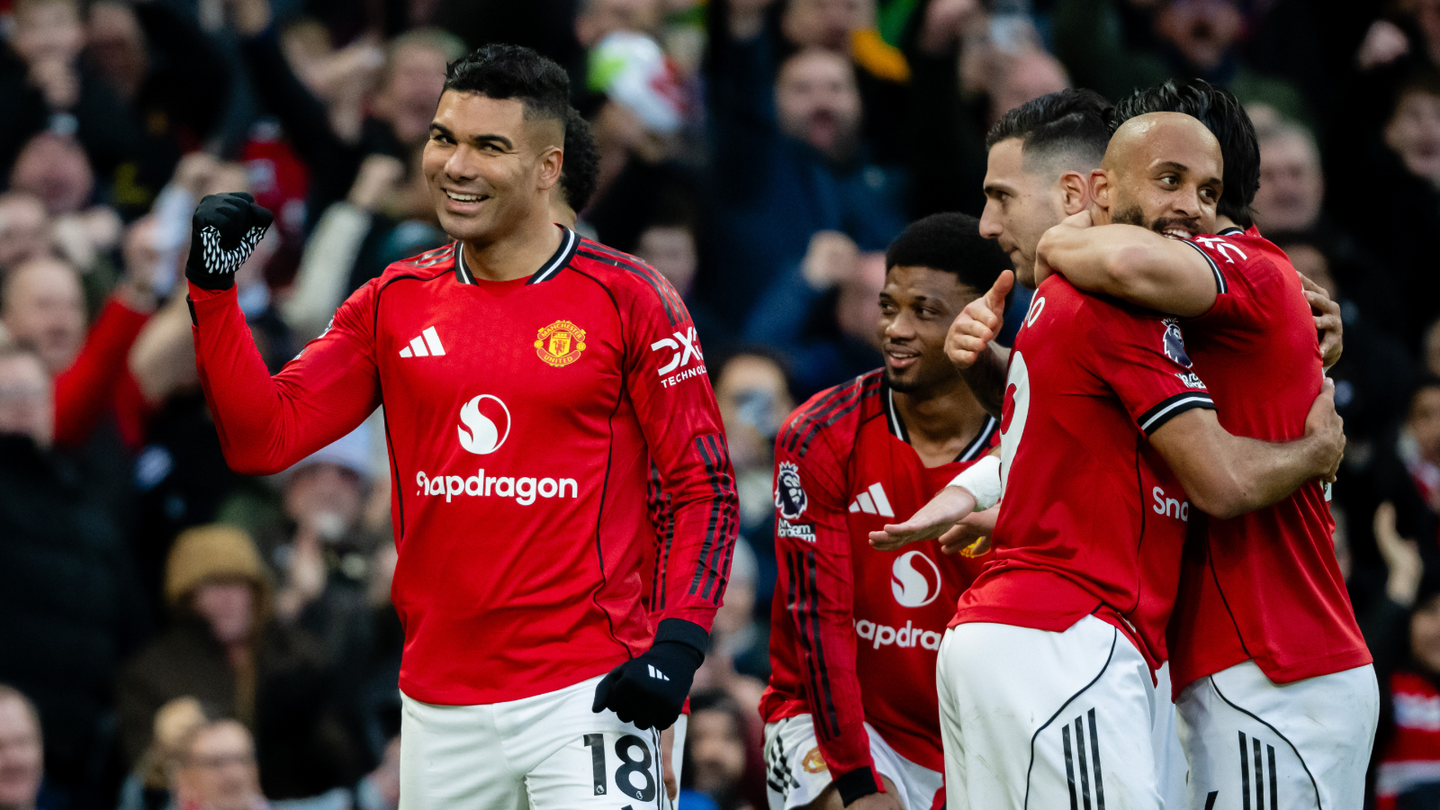
Ryan Benson of Opta Analyst assesses Casemiro's impact this season and outlines why this summer is the right time for him to move on despite his impressive performances.
On 22 January, when it was announced that Casemiro was to leave Manchester United upon the expiry of his contract at the end of the season, it’s fair to say the main angle for discourse revolved around how much he’d be missed.
Of course, that’s quite common when a player leaves any team. But for Casemiro, it was notable because it highlighted a significant shift in perspective.
It’s true that Casemiro is having a good season. However, it wasn’t so long ago that he was broadly considered a weakness in the Man Utd team and was attracting disparaging comments in the media.
His renaissance has been applaudable and in fairness, his return to a level of prominence at Man Utd hasn’t just been a facet of this season.
Battling back into favour
Casemiro fell out of favour initially at the start of Ruben Amorim’s time in charge, with the Portuguese coach suggesting Casemiro didn’t have “the characteristics” to play as part of a midfield two in his 3-4-3 system.
The chart below from last season demonstrates how Casemiro’s minutes diminished around the point that Amorim took over – but it also depicts how he battled back into contention.
Casemiro was a fairly awkward fit out of possession because Amorim wanted Man Utd to press high. He even acknowledged that he opted to change the team’s pressing structure to accommodate the former Real Madrid star.
“We understood that he cannot jump all the time pressing high,” Amorim said towards the end of the 2024/25 season. “We need to let him understand and sometimes it is better to put three defenders and let him be the fourth defender and put the wing-backs pressing high.”
The issue of Casemiro’s diminished mobility was probably best highlighted by the fact that last season he had the third-lowest top speed (30.5 km/h) among central and defensive midfielders to play at least 450 minutes in the Premier League.
Benefiting from Carrick's compact Man Utd
That figure is exactly the same this term, but it’s been less of a glaring issue because the general feeling is Man Utd are more compact. The numbers tend to back that up as well.
For instance, Man Utd have spent 27 per cent of match time using a high block in 2025/26, down from 32 per cent in 2024/25 and 30 per cent in 2023/24. And yet, their passing sequences have had an average start distance from their goal of 42.8m, up from 42.3m last term and 41.5m the season before.
These differences aren’t massive, of course, but they do suggest some change. The higher average start distance also supports the idea that the defence operates closer to the midfield, meaning Casemiro has been less likely to find himself drowning in acres of space.
Increased attacking influence
But none of this really takes into account how important Casemiro’s been offensively as well.
Since the start of February 2025, Casemiro’s 11 goal involvements (seven goals, four assists) across all competitions is bettered only by Bruno Fernandes (35) among Man Utd players.
Over that same period, just two Premier League players have scored more than Casemiro’s five headed goals in all competitions, with the Brazilian undoubtedly playing a role in helping Man Utd become a highly efficient side at attacking set-pieces.
His passing ability remains a real weapon for Man Utd as well.
Watch: Casemiro's goal and celebration against Fulham
Casemiro hits the 67 celebration after putting @ManUtd in front 🤪 pic.twitter.com/KzPKAF4UoC
— Premier League (@premierleague) February 1, 2026
Not only does he rank 10th for line-breaking passes (LBPs) this season (145) among central and defensive midfielders, having played fewer minutes than all of those ahead of him, but four of his LBPs have been in passing sequences that ultimately led to goals – only three players can better that.
This helps quantify the usefulness of his incisive passing – and one such example came last weekend, as Casemiro threaded the ball through to Matheus Cunha to rifle in against Fulham.
Casemiro has essentially, then, gone from being behind Toby Collyer (who’s just joined Hull City on loan) in the pecking order, according to Amorim, to being one of the most important players in the Man Utd team.
Right time to go?
But this shouldn’t distort the reality that it’s probably the right decision for Man Utd to let him move on.
Too often over the past decade or so they’ve held on to players for too long or given too much importance to ageing players.
For a while, it looked like Casemiro fitted into that bracket as well, but his form over the past 12 months actually suggests Man Utd got things about right with the Brazilian. He’ll have had four seasons at the club, and for more than half of that time he’s been a valuable member of the team.
Renewing his deal may have sent the wrong message, however, when the club is trying to cultivate a forward-thinking image to differentiate it from the barren years post-Sir Alex Ferguson.
With all this in mind, Casemiro won’t leave as a signing to be regretted, rather a player who overcame adversity to become useful and relevant again.
Man Utd move on without desperately clinging to something or in fear of losing a good player for nothing, while Casemiro departs with his reputation restored and pundits eating their words.
It seems to be a rare example – especially for Man Utd – of both sides getting the timing right.