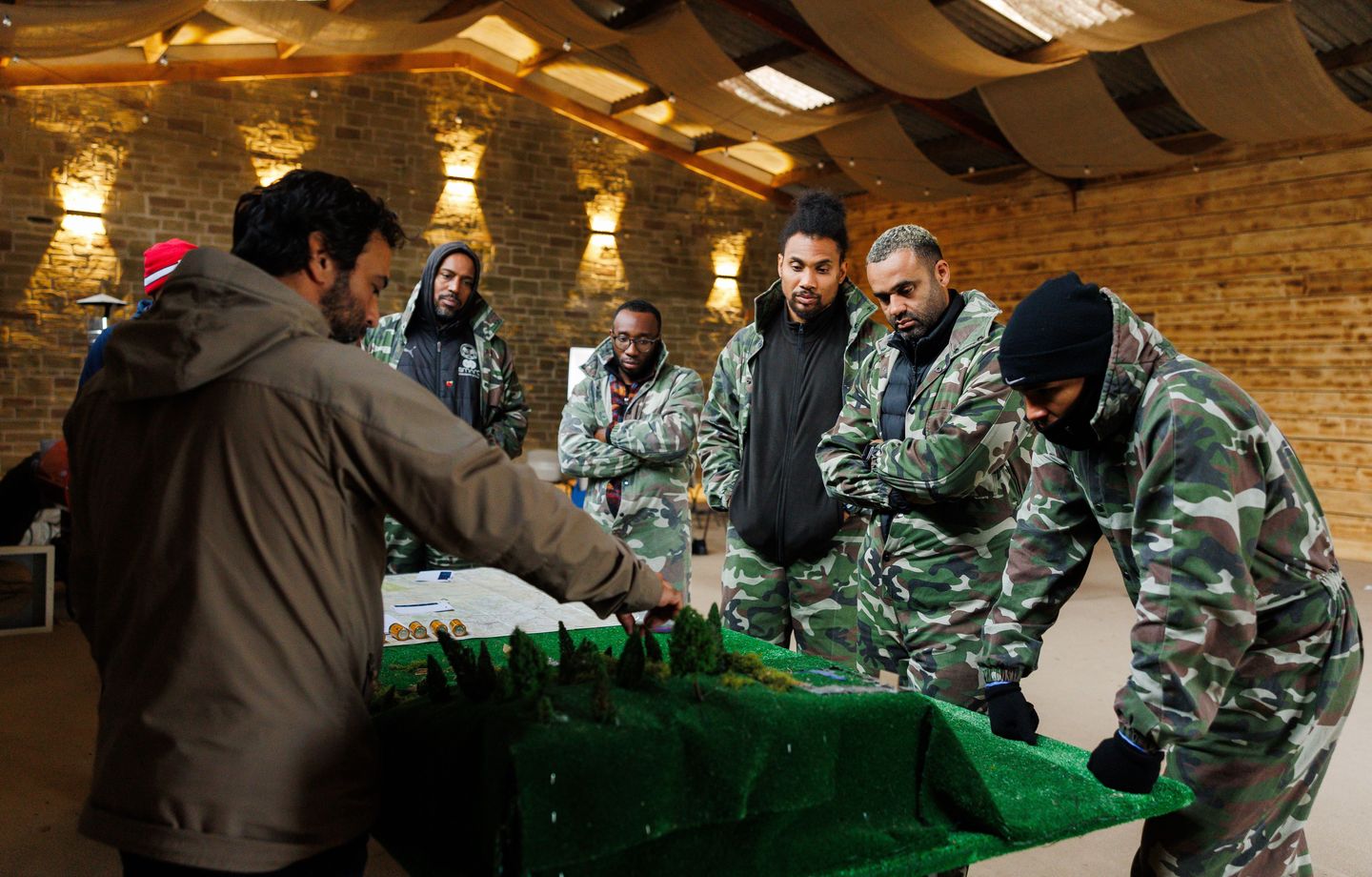
Each year, coaches across the Premier League’s coach development programmes step into a world far removed from the training ground. They find themselves navigating woodland under fading light, coordinating teams under pressure or negotiating with locals inside a fictional country created exclusively for their learning.
It is an environment that feels far from football, yet it is here that many coaches and coach developers say they learn the most about themselves and their leadership.
Delivered in partnership with leadership development consultancy Fieri, the military themed experience has become one of the most distinctive and impactful elements of the Premier League’s coach development offer.
What began more than ten years ago as an introduction to military style tasks has evolved into a sophisticated simulation that stretches leadership, deepens self-awareness and builds powerful bonds within every cohort.
What Can Football Coaches Learn from the Military?
The experience is designed and led by Harrie Ellaway, a former Corporal in the Royal Engineers and current Head of Innovation at Fieri. For him, the connection between high performance sport and military environments is clear.
“There is a lot of crossover between sport and the military. Those split second decisions, the pressure you are under. The consequences can be different, but they do not necessarily feel different to your body and your brain” he says.
In a world where coaches and coach developers are used to operating on pitches and in classrooms, shifting them into an unfamiliar landscape creates what Harrie calls a laboratory. The scenarios are safe, but they feel real enough to provoke genuine reactions. “Your heart still races even if you know there are no real consequences. You cannot control that. That is why it works” he says.
For the Premier League’s Senior Coach Development Manager Danny Newcombe, this shift of environment is central to the value of the experience. “When you take coaches out of football and into a different world, we leave baggage at the door. There is no ego attached to being good or bad at the military because it is not their job. It means they can fully immerse themselves” he explains.
“Another key element with the military experience is, due to it being a simulation experience, we can design and dial up the key skills that we want to improve within the coaching world. The ability to make decisions under pressure, delegate, give clear instructions, reassess when everything's gone wrong and the whole plan needs changing and then how quickly can we re-plan and then find a new solution.”
Stretching Leadership in Real Time
Across two intensive days, coaches rotate through leadership roles within scenarios ranging from night navigation to casualty evacuation and ambush planning. The simulation places them in situations thick with uncertainty. Information is incomplete. Conditions shift without warning. Time constraints tighten suddenly. Every element is engineered to test judgement when clarity is scarce.
Harrie highlights four core areas the experience targets.
- Decision making amid ambiguity
- Communication discipline
- Self awareness under stress
- Delegation and clarity of intent
In many cases, the breakthrough comes when coaches recognise the difference between directing a plan and enabling a team. “One of the big steps was understanding intent. What are the tramlines I set for my team and how do I trust them to work within it” says Danny.
When the Moment Reveals the Leader
The scenarios often expose habits coaches did not know they relied on. Harrie describes one powerful example during an ambush exercise. A coach who wanted to avoid being overly directive was placed away from the frontline with only a radio for communication.
“He came back down and said he found it so hard. He realised how frustrated he had become because he could not control what was going on in front of him. That realisation was huge” says Harrie.
Another encounter involved night navigation in the Peak District. A confident coach took the lead but soon found his team zigzagging off course repeatedly.
“He had to get it wrong lots of times before he realised he needed to bring others in. Navigation is a great metaphor. If you do not engage your team, they just put their heads down and follow blindly” Harrie reflects.
These moments deepen the reflection session on the final day. Coaches speak openly about their behaviours and choices, often with surprising honesty. “They feel like they have shared real adversity. That creates honest feedback and genuine connection” Harrie says.
Building Trust in a Fictional World
A distinctive part of the experience is the suspended reality created by the Fieri team. Coaches are dropped into a fictitious country with unfolding storylines, characters and dilemmas that run across the coaching development programmes, meaning a coach who attends more than one experience encounters storylines that evolve from year to year.
“It is like a Marvel universe. The story continues if you move from one programme to another” Danny says.
Role players with real military backgrounds populate the world. Coaches negotiate, gather intelligence, manage relationships and face curveballs designed to force leadership decisions. In one scenario, an unassuming local woman entered an unlocked vehicle and extracted sensitive information from coaches who were expecting a hostile threat rather than a friendly conversation.
“That was the real task. It was about how they behave when they do not think they are on task” Harrie explains.
The level of buy in often surprises even the organisers. The most telling example came when armed police responded to a call near the training area and approached the group. The coaches assumed it was all part of the scenario. “They thought the actors were very convincing. That was the purest test of suspended reality” Danny jokes.
Although each coach leads at certain points, the majority of their time is spent as team members. This is intentional. Followership is seen as an essential leadership skill.
“How do I support the leader while still leading myself. How do I stay engaged even when I am not in charge. That is a massive crossover to co-coaching on the pitch” Danny explains.
Translating Learning Back to the Club
The impact does not end with the simulation. Each coach receives a one to one coaching call with their syndicate leader a month later to review how they have applied their learning.
Common themes emerge. Delegation improves. Intent becomes clearer. Communication sharpens. Leadership agility increases.
“One coach has reshaped how he leads his multidisciplinary team. The effect has been profound and quick” says Danny.
How the Experience Continues to Evolve
The Premier League and Fieri have worked together to refine the experience each year. Different venues now host different levels of the programme, and each programme has a different focus on various elements of leadership.
- Frontline leadership for PPCS (Professional Player to Coach Scheme) and CIDS (Coach Inclusion and Diversity Scheme).
- Operational leadership for ECAS (Elite Coach Acceditation Scheme).
- Strategic leadership for EHOCD (Elite Heads of Coach Development).
Scenarios, scoring systems and the final large scale task are redesigned annually to keep the experience fresh and challenging. “We are committed to never delivering an event the same way twice. Iteration is part of our identity” says Danny.
A Unique Experience That Stays With You
Many coaches leave with a feeling that is hard to describe. Some call it life changing. Others say they have tried to explain it to friends but cannot quite capture the mix of challenge, camaraderie and learning.
Harrie sees that as the biggest compliment. “Do you go away and talk about it. That is our test. They create stories only their cohort understands. That builds bonds that last” he says.
When asked what advice they would give to future participants, Danny keeps it simple.
“Two feet. Just jump in. It is high stretch but great fun. The more you dive in, the more you get out” he says.
Harrie agrees. “If you are serious about developing your craft, this is another tool to help you. You get out what you put in” he adds.
What began as a bold idea in 2012 has now become a defining part of the Premier League’s coach development programmes. A fictional world with real lessons. A military experience that strengthens football’s leaders of tomorrow. An immersive challenge that stays with coaches and coach developers long after the final scenario ends.