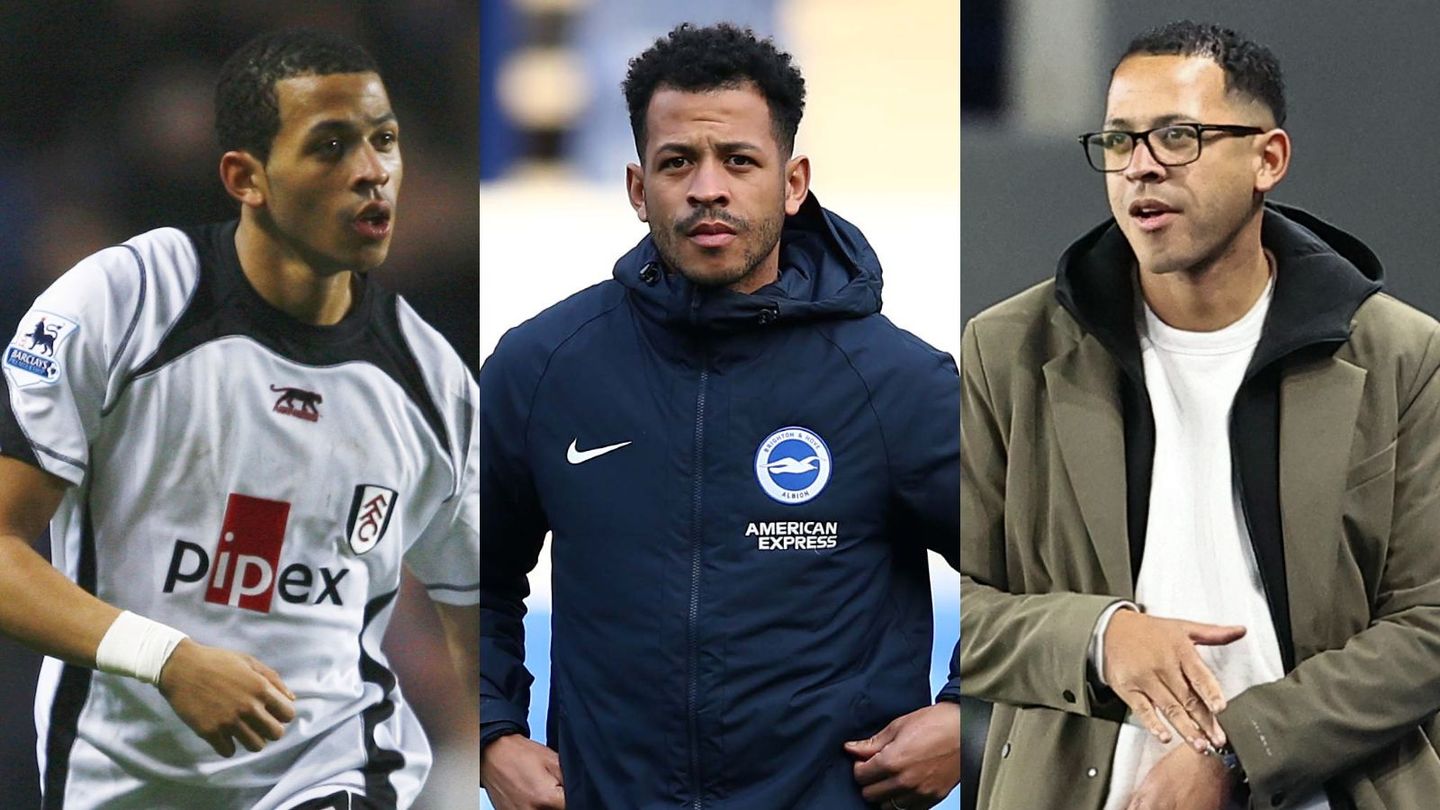
Football writer Ben Bloom revisits Liam Rosenior's journey and explores the experiences that readied the new Chelsea head coach for Premier League management.
It is difficult to pinpoint precisely when Liam Rosenior began a football coaching journey that would culminate in him taking the Chelsea reins, because analysing the sport is something he has always done.
Recently, he described how he was already fascinated by football tactics at the age of six, recalling how his primary-school teachers suggested he might attend a school for gifted children due to his early interest in logic and strategy.
His father, former professional player and manager Leroy, believes the obsession had already begun before then, saying: “When Liam was just two or three, he would listen to my football conversations while pretending to sleep and soak it all in.”
Whenever it exactly was, there has long been a sense of destiny about Rosenior’s coaching career – one that has seen him work in the Football League with Derby County and Hull City, strengthen his reputation in France with Strasbourg, and now move into the Stamford Bridge hotseat aged 41. The football dugout is Rosenior’s natural place.
Learning from dad
There is a picture that Rosenior drew when he was 10 years old. Leroy had asked his son to sketch what he wanted to be when he was older, and the resulting image was of him standing on the football touchline as a manager.
“Not as a player,” he told the Athletic in 2022. “As a manager. That’s why, to me, it feels like my calling, my goal in life. And not just to be a manager, but a successful manager.”
With Leroy as his father, Rosenior grew up embedded in football. After a successful playing career that included spells at Fulham and West Ham United, Leroy would go on to manage the likes of Gloucester City, Bristol City reserves, Merthyr Tydfil and Torquay United. For his son – who, alongside his brother, would spend every other weekend with his father – it was a chance to experience a dream world.
“We’d go down on a Friday night after school and get a takeaway – fish and chips for us, a kebab for my dad – then sit round the table talking team selection, tactics, set-pieces and substitutions,” said Rosenior.
“It was time spent with my hero, my dad. Really special. Then, on the Saturday, I’d be with my dad while he prepared his team-talk, in the dressing-room as he delivered it, and in the dugout during the game. You see old pictures of Brian Clough on the bench with his son, Nigel. Well, it was the same with me. I’d be shouting at the players from the sidelines when I was 10. It’s always been in my blood.”
In an interview with the Premier League last year, Rosenior revealed he even began taking sessions as a player-manager of his school team by the age of 11.
“I know that makes me sound like a weirdo, but it was normal to me because I loved coaching,” he said.
A coach in the making
A talented footballer in his own right, Rosenior originally made his name as a full-back and winger, featuring in the Premier League for Fulham, Reading, Hull City and Brighton & Hove Albion, in a career that saw him make almost 400 appearances.
It was at the last of those clubs that he officially began his coaching career, taking up a role with Brighton’s Under-23 side after retiring from playing. Unsurprisingly, he had informally been learning the ropes for some time.
“At every club I played for, I coached the youth teams,” he told the Ligue 1 website in 2024, explaining how he would constantly pester his managers for insight – something not all of them appreciated.
If injured or not selected during his latter days as a player, he would “annoy the stewards by watching the game from the mouth of the tunnel so I could practise making snapshot decisions from the touchline”.
Never was an opportunity missed to try to hone the craft that he longed for.
Football League days
After a year coaching in the Brighton youth ranks, Rosenior moved to Derby County in the summer of 2019, initially to support manager Phillip Cocu. He then stepped up to assistant manager when Wayne Rooney was appointed in charge.
Following Rooney’s resignation in 2022, he was named interim manager for the start of the 2022/23 League One campaign, before leaving the club upon the permanent appointment of Paul Warne.
“Without that experience with Wayne, I don’t think I would be the manager I am now,” said Rosenior.
Rooney last week offered his support to his former assistant, telling the BBC’s Wayne Rooney Show: “He’s taken chances, and hopefully that pays off because I think Liam is as good a coach as I’ve ever worked with. His detail, how he approaches the day-to-day, he’s as good as I’ve worked with.”
Just a few weeks after leaving Derby, Rosenior earned his first permanent managerial role at Hull – a club he had represented for five years as a player. Taking charge of a team mired in Championship relegation trouble, he guided them to 15th in his first season at the helm, before narrowly missing out on a play-off spot when finishing seventh – the club’s highest league placing since their relegation from the Premier League seven years earlier.
It was a shock, then, when he lost his job despite a nomination for Championship manager of the year.
French growth
While Hull would only just survive relegation to League One on goal difference the following season, Rosenior continued to flourish.
Hastily snapped up after his Hull departure, he succeeded Arsenal legend Patrick Vieira as manager of Ligue 1 side Strasbourg and promptly named the division’s youngest starting XI in his first match. By the end of his first season in charge, he had guided the club to seventh place and qualified for the UEFA Conference League.
Early in France, he told the Guardian: “What I’ve learned in three months here, I probably wouldn’t have learned in England over five years.”
His obscurity and relative inexperience also meant he had to win over a club that had exclusively employed French managers for the previous 21 years.
“It was a big change for the existing staff as we have a different way of thinking and working,” he told the Premier League.
“In France it can be quite hierarchical, with the manager always shown tremendous respect. So, in the beginning it felt like some people were scared to have conversations with me.
“That’s not how I want it to be because I’m a people person. At first, I think some found it strange that I’d stop off in the canteen and have a chat with the lady serving us drinks, asking about her family, as that kind of thing was not the norm, but they are used to it now.
“They understand my door is open and how relaxed we are, but at the same time there is also an expectation that everybody always works very hard.”
Reaching the top
His Chelsea appointment makes Rosenior only the 10th permanent black manager in Premier League history – a subject he is passionate about, with his father Leroy awarded an MBE in 2019 for his work as an anti-racism campaigner.
His arrival also sees the league welcome one of the most articulate communicators on the managerial circuit. In his final season as a player in 2017/18, he wrote weekly columns for the Guardian, on topics ranging from the importance of mid-season breaks and abuse suffered by managers, to big-money transfers and his release from Brighton. He also worked as a television pundit immediately following his playing retirement.
He was equally as adept at that, but his calling lay elsewhere, as a long-term student of the game, steadily waiting for his time to ascend the top of the managerial ladder.
“I’ve studied for 26 years to ensure I’m the best coach I can be,” he said, upon taking charge at Derby County three years ago. “To understand people as well as I possibly can. I’ve prepared pretty much my whole life, as best I can, to be in this situation.”
It was not a question of if Rosenior would manage in the Premier League; it was a case of when.